
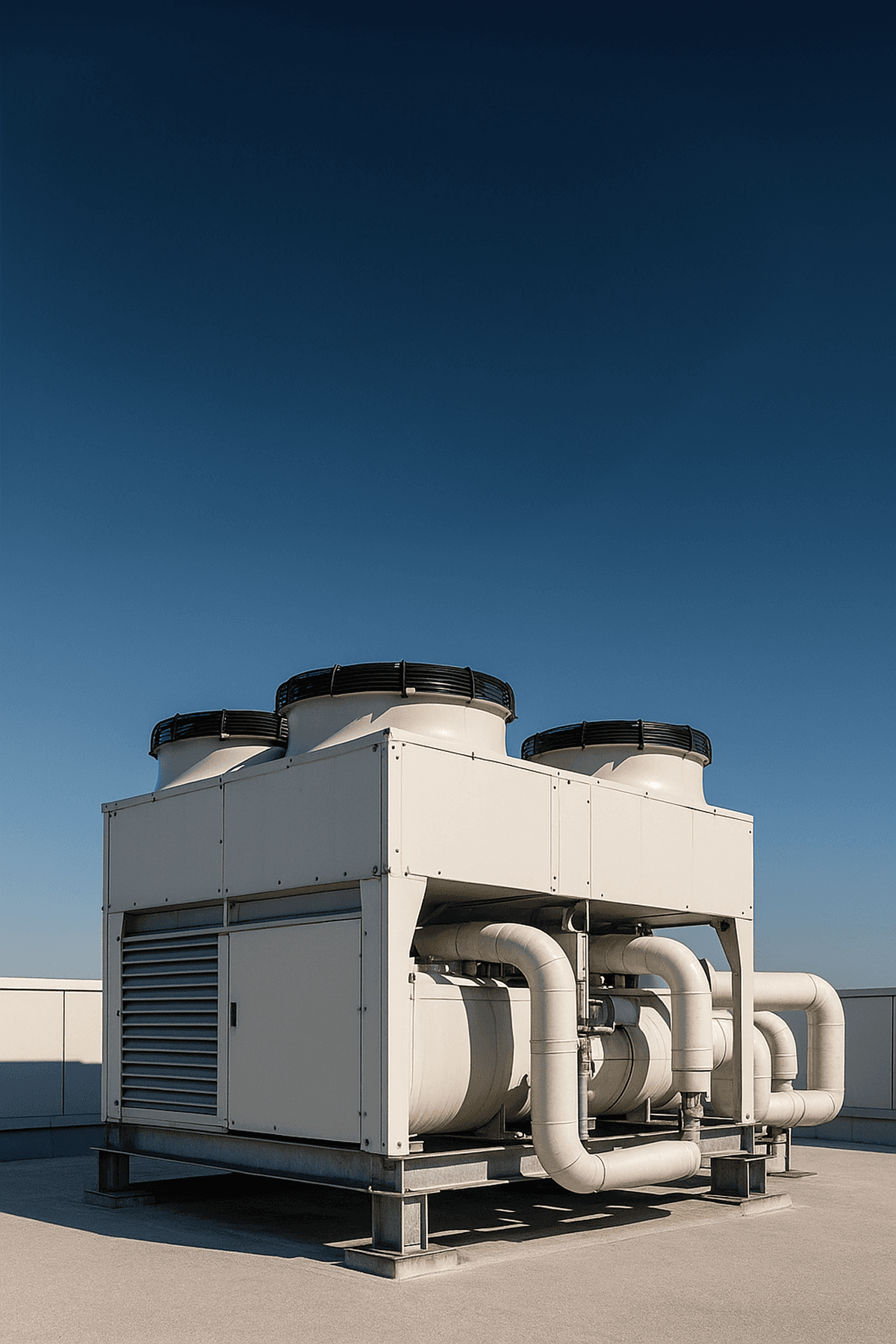
Mitsubishi Electric Indonesia
Mitsubishi Electric sells room air conditioners to homeowners and factory automation systems to industrial buyers, under one brand. Two products, two buying processes, two audiences that don't think alike, and both expected to find what they need on the same website. As the catalog grew across residential, commercial, and industrial segments, the platform behind it hadn't grown with it. Representing that breadth clearly, under one digital roof, was the problem the business needed solved.
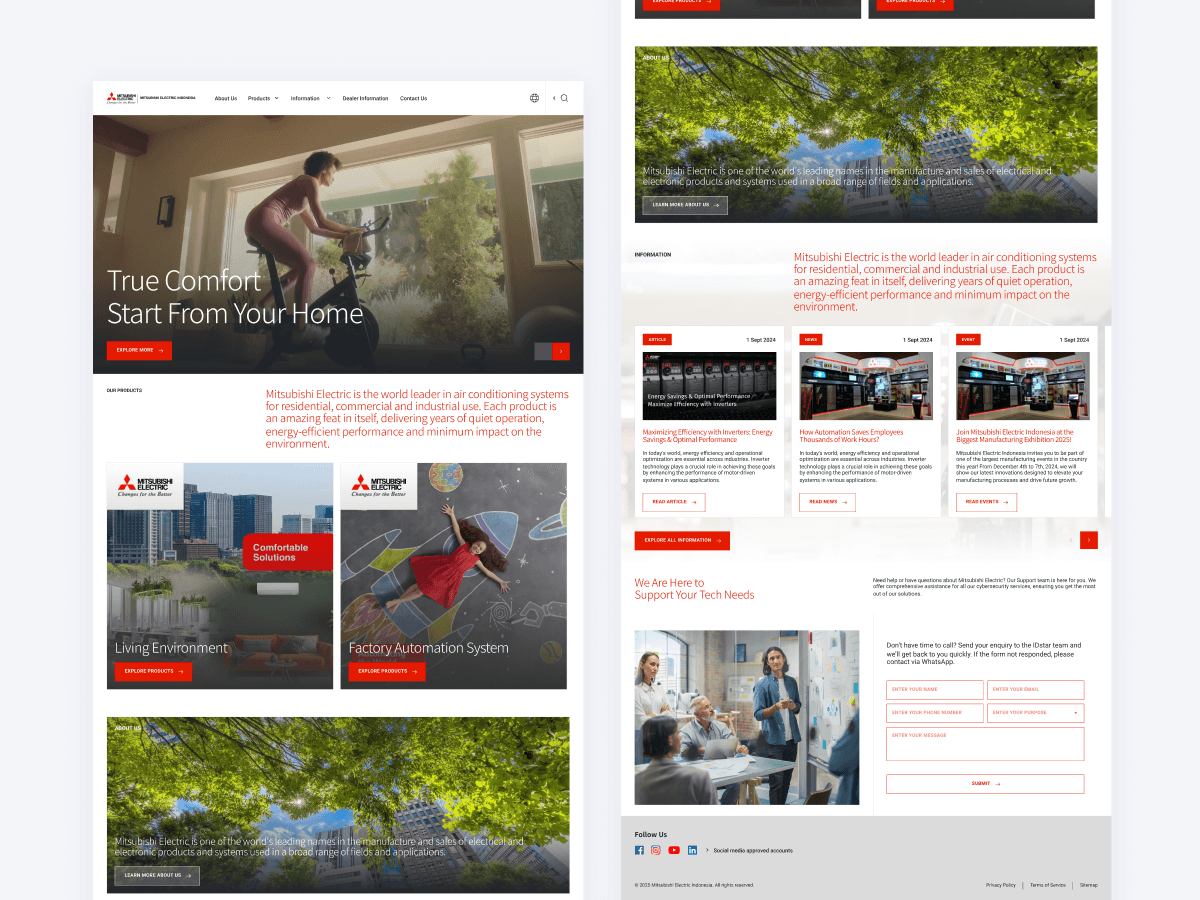
Challenge
The previous platform ran on an outdated technology stack that made managing the product catalog difficult at scale. But the sharper problem was who it was built for, which was nobody in particular. A homeowner browsing wall-mounted ACs and a procurement manager researching industrial VRF systems hit the same front door and got the same generic experience. The homeowner wants a quick comparison and a nearby dealer. The procurement manager wants a spec sheet and a downloadable catalog before a single call happens. Serving both, without either one wading through content meant for the other, was the real design problem.
My Roles
I owned this project end to end as the sole Product Designer, responsible for the full design scope from architecture analysis through to UI handoff. I worked alongside the development team on the technical rebuild and managed the design relationship with Mitsubishi Electric Indonesia's stakeholders as the primary client contact throughout.
Process
I audited the existing architecture and looked closely at how the product data was actually structured. The catalog spanned multiple categories across B2C and B2B segments, with deep sub-category hierarchies underneath. A new interface on top of broken data would just break again the moment the catalog grew. So I fixed the data model first, then built the IA on top of it. The defining decision was to center navigation around the B2B segment, giving industrial buyers a direct path to specs and catalogs, while keeping B2C users on their own clearly separated path. From there, full UI design, development, QA, launch.
Key Decision
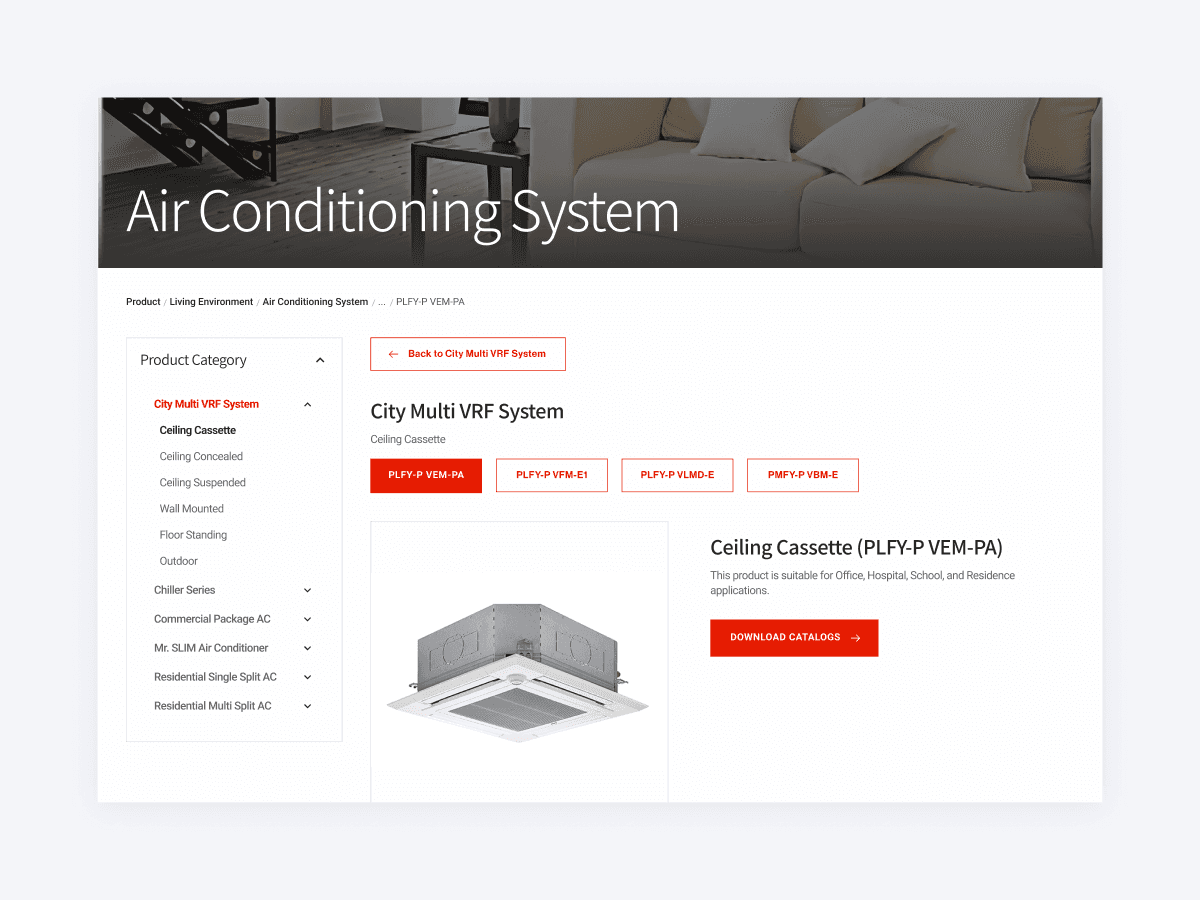
B2B-First Navigation Without Losing B2C Clarity
A procurement manager and a homeowner aren't just buying different products, they decide differently. One needs a spec sheet and a catalog download, fast. The other needs a comparison and a store locator. Blending both into one navigation made it worse for everyone, so I centered the IA on B2B while keeping clear consumer entry points, letting each audience orient in seconds instead of hunting through content meant for someone else.
Data Restructuring Before Interface Design
The existing catalog had structural problems no new UI could paper over. Design on top of broken data, and the site breaks again the next time a product line gets added. I fixed the data architecture first, so every product page, category, and filter could scale without accumulating design debt every time the catalog grew.
Modern Technology Stack as The Prerequisite, Not The Afterthought
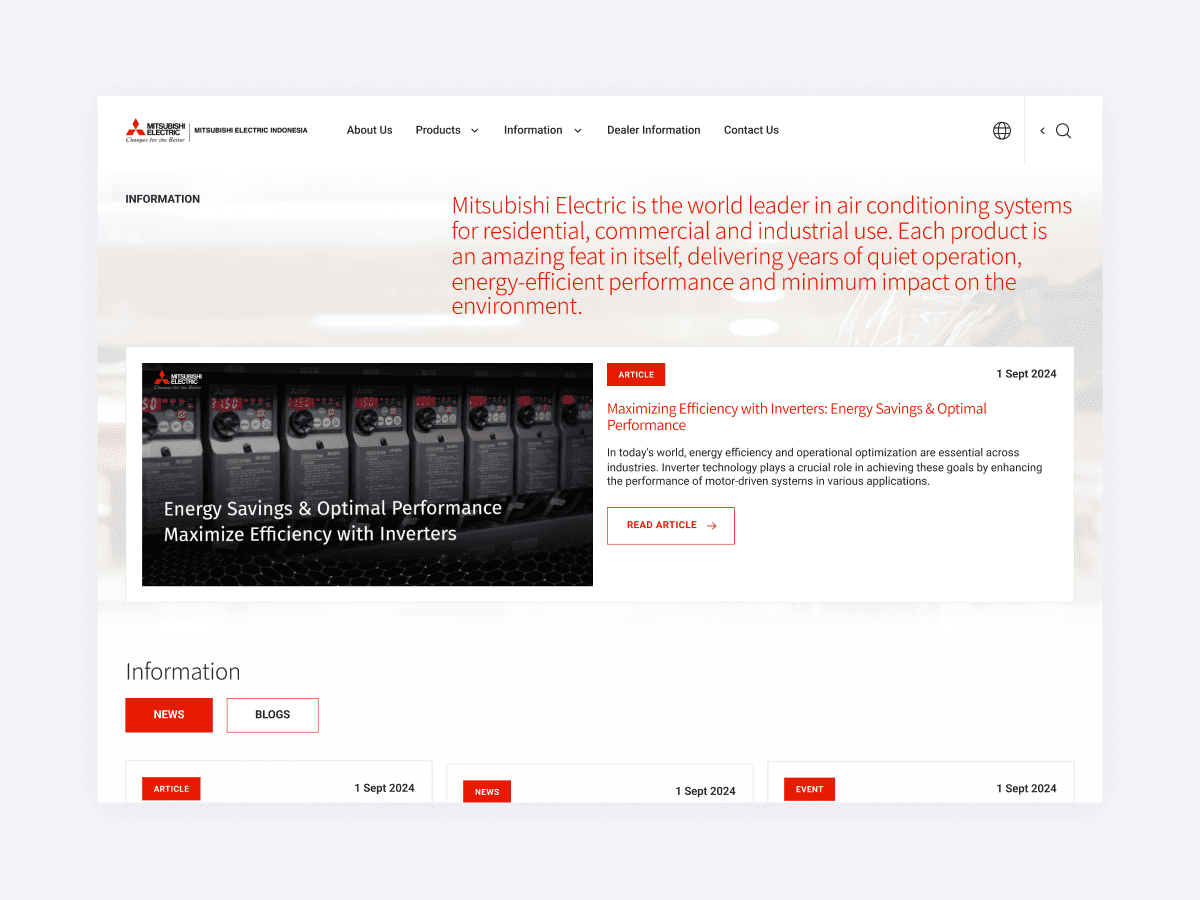
The old stack was limiting what the platform could do, on performance and on content management both. Migrating wasn't a nice-to-have, it was the prerequisite. Without it, the catalog structure, dedicated product pages, and dealer locator couldn't function at the scale Mitsubishi Electric Indonesia's operations actually required.
Validation
I reviewed the design directly with Mitsubishi Electric Indonesia's team at key milestones before launch, incorporating stakeholder feedback across the product catalog, B2B-facing sections, and navigation structure before the platform went live.
Solution
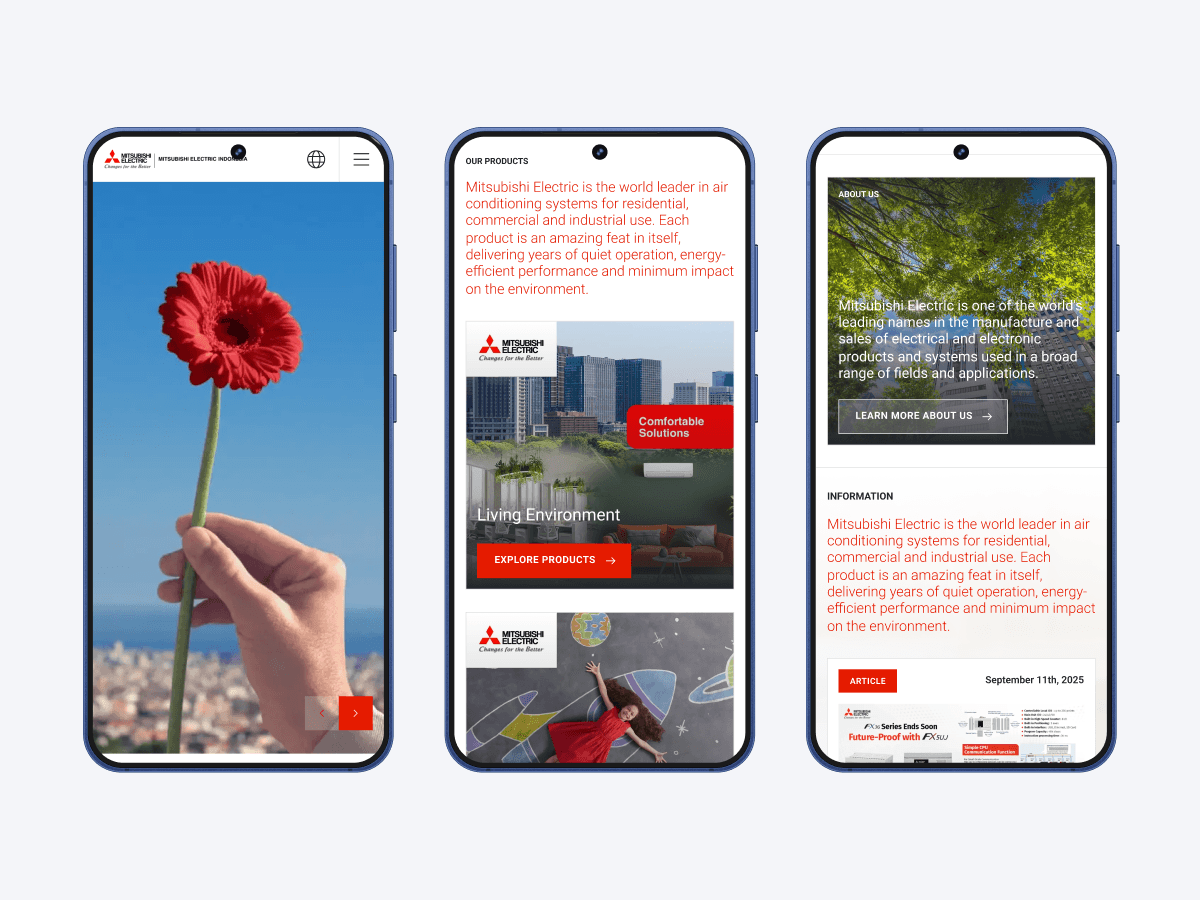
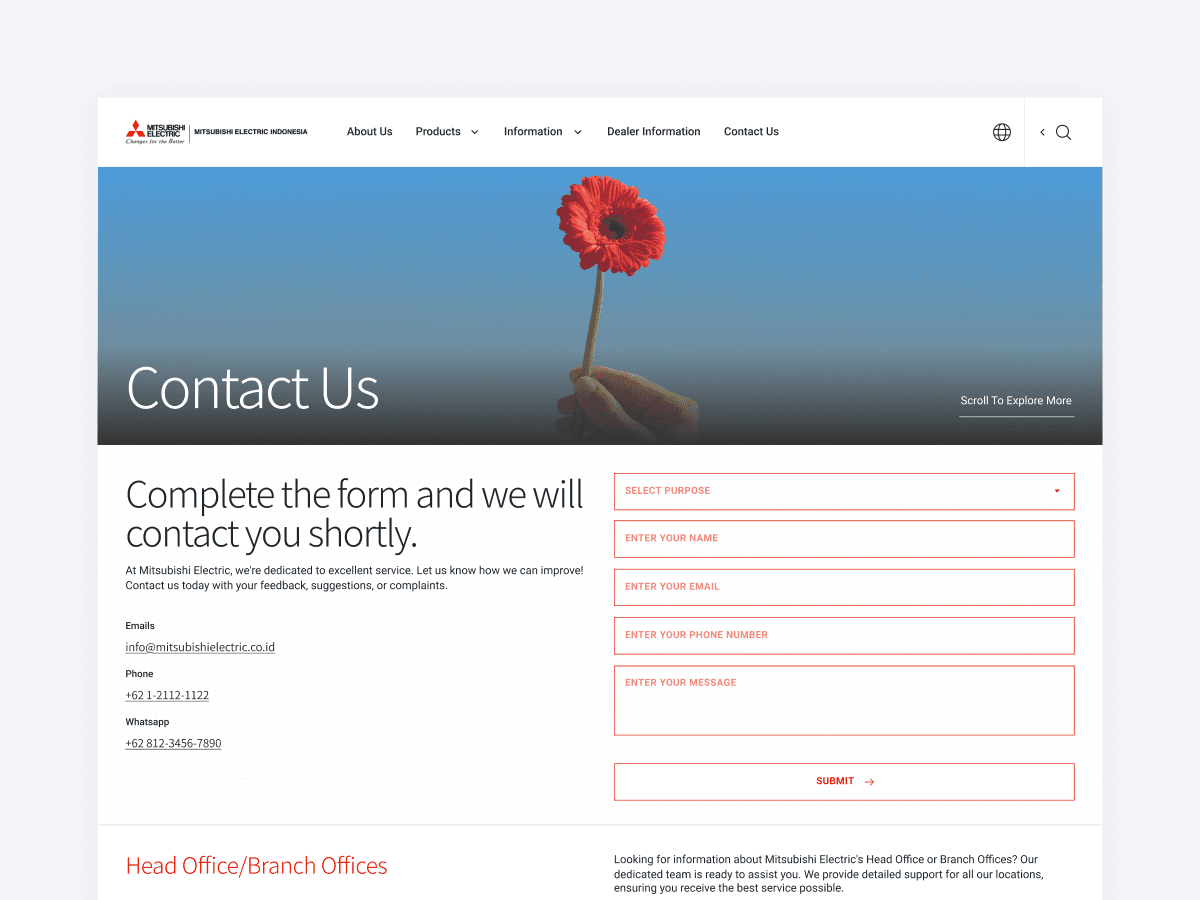
The rebuilt mitsubishielectric.co.id runs on a modern technology stack with a restructured data model supporting the full catalog at scale. Dedicated product pages carry technical specifications and downloadable catalogs for B2B buyers. The authorized dealer locator, after-sales service section, and information hub sit alongside a separated consumer experience that keeps B2C users on their own focused path. The visual system reflects the precision and clarity the Mitsubishi Electric brand requires, for both audiences.
Result
- Post-launch organic search generated 31,832 Impressions from 2,229 Unique Search queries in the first quarter, showing broad keyword indexing across the full product range
- Brand keyword "mitsubishi electric indonesia" ranking at an average position of 1.9 with an 18.84% Click-Through Rate, placing the platform consistently at the top of relevant brand searches
- Outdated technology stack fully replaced with a modern infrastructure that supports catalog growth without requiring developer intervention for routine updates
- Complex, multi-segment product catalog restructured across residential, commercial, and industrial categories so both B2C and B2B buyers can navigate to the right product independently
- Platform live at mitsubishielectric.co.id, serving both audience segments through a unified but clearly separated digital experience
 Kita Garuda